
Air preparation
Portable Aftercoolers
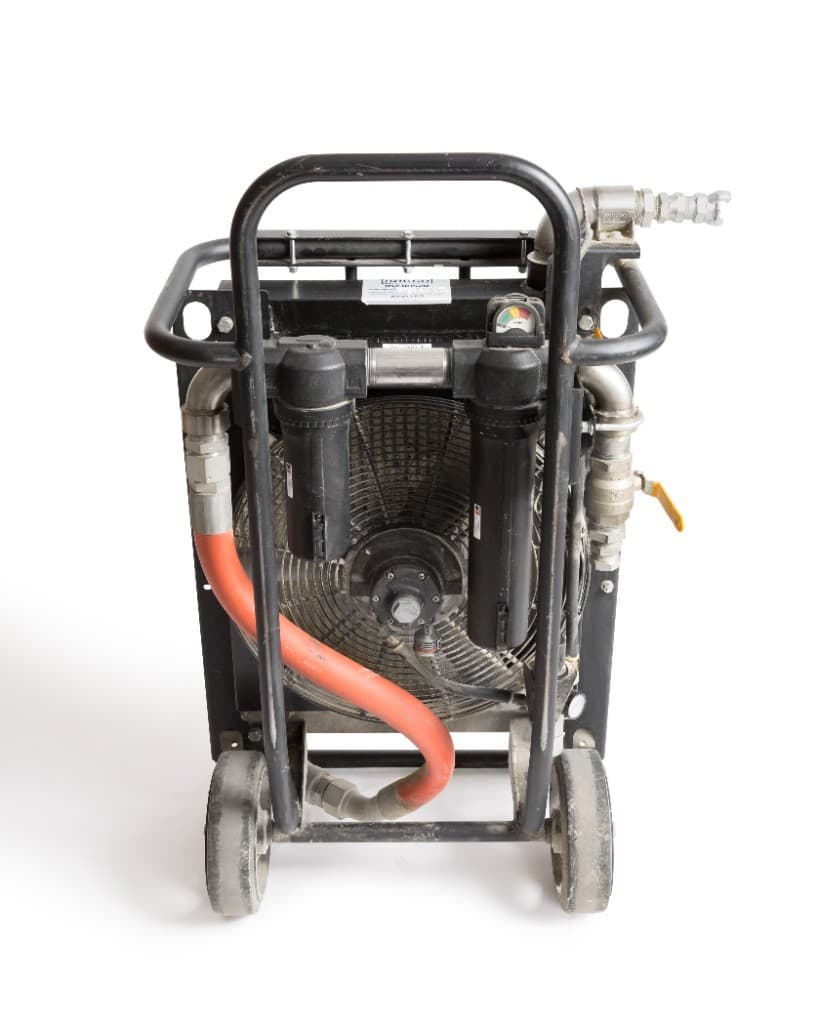
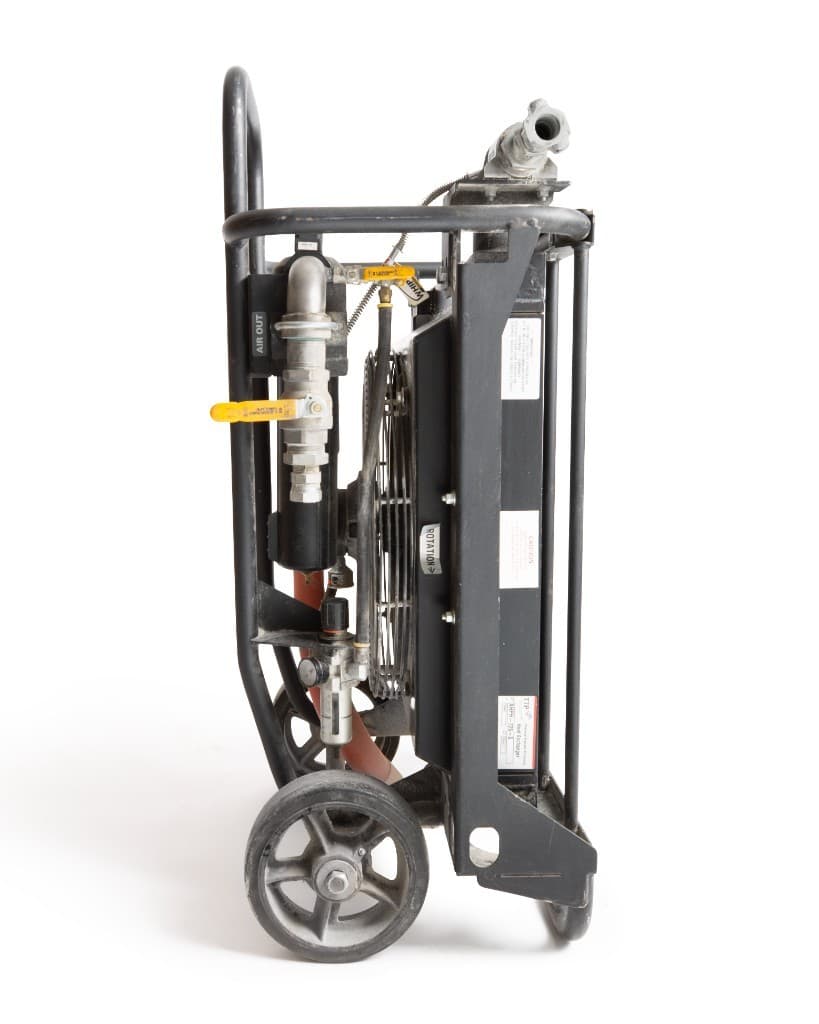
A portable aftercooler cools, filters, and dries the hot, moist air from a diesel compressor before it reaches your dry ice blaster.
Why You Need One
Diesel compressors discharge a high volume of hot, moist air. Because water in the air lines causes dry ice pellets to jam, disrupts blasting performance, and damages equipment, an aftercooler is mandatory when using a diesel compressor. Even if a compressor features a "built-in" aftercooler, a portable unit is still required. For rentals paired with a portable diesel compressor, we recommend a unit rated at 375 to 400 CFM at 150 PSI or higher.
Pressure, flow, and the air supply questionnaire are in the air supply guide.
Our Aftercoolers
We offer Command Air aftercoolers in models designed to support one or two dry ice blasting systems (most customers use one aftercooler per machine). These units feature a pneumatic fan running across a large radiator, paired with an efficient coalescing particulate filter and a separate water filter to remove impurities. Together, they efficiently cool, filter, and dry compressed air to ensure reliable operation.
Request a Rental Quote or call 614-754-7192614-754-7192
How They Connect
- Diesel compressorYour air supply
- 25 ft, 1" air hoseIncluded with the aftercooler
- AftercoolerCools, filters, and dries the air
- 1" air hoseIncluded with the rental kit
- Blasting machineKeep the aftercooler close to it
For optimal performance, position the aftercooler as close to the blasting machine as practical, away from direct sunlight and heavy debris. Both the inlet and outlet on the aftercooler feature 1-inch Chicago-style two-lug fittings, matching the 1-inch connection on your diesel compressor. Use the provided 25-foot, 1-inch air hose to connect the compressor to the aftercooler, then run your dry ice blasting equipment directly from the aftercooler's outlet.
Additionally, remember that pneumatic aftercoolers consume roughly 25 CFM of compressed air, which must be factored into your total compressor capacity calculations, along with the nozzle, line loss and other factors governing your air consumption.
Specifications
| Airflow | 233 SCFM at 100 psi |
|---|---|
| Weight, single-machine model | 180 lb |
| Weight, two-machine model | 205 lb |
| Dimensions | 48 × 26.6 × 18.75 in |
| Inlet and outlet | 1" Chicago two-lug fittings |
| Max pressure | 230 psi |